Home / Blog / Image Translation / Video Translation / Support / Donation / RSS
How to Translate Japanese Manga Sound Effects
Japanese makes heavy use of onomatopoeia and mimetic words — they make the language vivid, but they also pose plenty of challenges for translators.
Below we list Japanese onomatopoeia and mimetic words by category, together with reference translations in both Chinese and English.
Common Onomatopoeia and Mimetic Words
1. 擬音語 (Giongo) — Imitating Real Sounds
Animal Calls
| Japanese | Reading | Chinese | English |
|---|---|---|---|
| ワンワン | wanwan | 汪汪 | woof woof |
| ニャーニャー | nyānyā | 喵喵 | meow meow |
| モーモー | mōmō | 哞哞 | moo moo |
| コケコッコー | kokekokkō | 咯咯咯 | cock-a-doodle-doo |
| ケロケロ | kerokero | 呱呱 | ribbit ribbit |
| チューチュー | chūchū | 吱吱 | squeak squeak |
| ヒヒーン | hihīn | 咴咴 | neigh |
Nature and Weather
| Japanese | Reading | Chinese | English |
|---|---|---|---|
| ザーザー | zāzā | 哗哗(大雨) | pouring |
| シトシト | shitoshiro | 淅淅沥沥 | drizzling |
| ゴロゴロ | gorogoro | 轰隆隆 | rumble |
| ピカピカ | pikapika | 一闪一闪 | flash / sparkle |
| ヒュー | hyū | 呼——(风声) | whoosh |
| ポツポツ | potsupotsu | 滴滴答答 | pitter-patter |
| パラパラ | parapara | 噼里啪啦(小雨) | sprinkling |
Objects and Actions
| Japanese | Reading | Chinese | English |
|---|---|---|---|
| バン | ban | 砰 | bang |
| ドカーン | dokān | 轰 | boom |
| ガシャーン | gashān | 哗啦(碎裂) | crash / smash |
| ドンドン | dondon | 咚咚 | thump thump |
| カチカチ | kachikachi | 咔哒咔哒 | tick-tock / clatter |
| シュッ | shu | 嗖 | swish |
| パチパチ | pachipachi | 噼啪 / 啪啪(鼓掌) | crackle / clap |
| ゴトゴト | gotogoto | 咕咚咕咚 | rattle |
| ガタガタ | gatagata | 嘎吱嘎吱 / 哐当 | clatter / rattle |
2. 擬態語 (Gitaigo) — Describing States and Appearances
Visual States
| Japanese | Reading | Chinese | English |
|---|---|---|---|
| キラキラ | kirakira | 闪闪发光 | sparkle / glitter |
| ピカピカ | pikapika | 亮晶晶 | shiny / gleaming |
| フワフワ | fuwafuwa | 软绵绵 / 蓬松 | fluffy / soft |
| ツルツル | tsurutsuru | 滑溜溜 | smooth / slippery |
| ザラザラ | zarazara | 粗糙 | rough / gritty |
| ベトベト | betobeto | 黏糊糊 | sticky |
| グチャグチャ | guchagucha | 乱七八糟 / 黏糊糊 | messy / squishy |
| ボロボロ | boroboro | 破破烂烂 | worn-out / tattered |
| ツヤツヤ | tsuyatsuya | 油光发亮 | glossy |
| カラカラ | karakara | 干巴巴 | dry / parched |
Manner and Movement
| Japanese | Reading | Chinese | English |
|---|---|---|---|
| ゆっくり | yukkuri | 慢慢地 | slowly |
| そっと | sotto | 轻轻地 / 悄悄地 | gently / quietly |
| じっと | jitto | 一动不动 / 盯着 | still / staring |
| ぐっすり | gussuri | 酣睡 | soundly |
| ふらふら | furafura | 摇摇晃晃 / 晕乎乎 | dizzy / wobbly |
| ぶらぶら | burabura | 溜达 / 闲逛 | strolling / wandering |
| ゴロゴロ | gorogoro | 懒洋洋地躺 | lazing around |
| パクパク | pakupaku | 大口大口(吃) | munching |
| ペラペラ | perapera | 流利(说话) | fluently |
| ドサドサ | dosadosa | 哗啦哗啦(倒下) | thudding |
3. 擬情語 (Gijōgo) — Describing Feelings and Emotions
| Japanese | Reading | Chinese | English |
|---|---|---|---|
| ドキドキ | dokidoki | 扑通扑通 / 心怦怦跳 | thump thump |
| ワクワク | wakuwaku | 兴奋不已 | excited / thrilled |
| イライラ | iraira | 烦躁 / 心急火燎 | irritated / frustrated |
| ムカムカ | mukamuka | 恶心 / 火冒三丈 | annoyed / queasy |
| ウキウキ | ukiuki | 兴高采烈 | cheerful / buoyant |
| ハラハラ | harahara | 提心吊胆 | anxious / on edge |
| グスン | gusun | 抽泣 / 吸鼻子 | sniffle |
| ニコニコ | nikoniko | 笑眯眯 | smiling |
| クヨクヨ | kuyokuyo | 闷闷不乐 / 纠结 | moping / brooding |
| ズキズキ | zukizuki | 一阵阵刺痛 | throbbing |
| ソワソワ | sowasowa | 坐立不安 | restless / fidgety |
| ガッカリ | gakkari | 失望 / 泄气 | disappointed |
Translation Methods
Japanese has an enormous number of onomatopoeic and mimetic words, and many of them have no ready-made equivalent in Chinese or English. Translators therefore usually fall back on two core strategies: replacing them with an onomatopoeic word, or rendering them descriptively.
1. Replacing with an Onomatopoeic Word
Find an onomatopoeic word in the target language that matches the original. There are two ways to do this.
1.1 Use an Existing Onomatopoeic Word in the Target Language
If the target language has an onomatopoeic word close in meaning and feel, simply substitute it.
| Japanese | Chinese | English |
|---|---|---|
| ドキドキ | 扑通扑通 | Thump thump / Ba-dump |
| バン | 砰! | BAM! |
| ドカーン | 轰! | BOOM! |
| シュッ | 嗖! | Swish |
| ワンワン | 汪汪 | Woof woof |
| ニャーニャー | 喵喵 | Meow meow |
| ザーザー | 哗哗 | Pouring |
| ガシャーン | 哗啦! | Crash! |
1.2 Transliteration (Romaji) Plus a Gloss
If no suitable onomatopoeic word exists in the target language, or you want to keep the Japanese flavor, you can keep the romaji transliteration and add a gloss to convey the meaning. This approach is very common in fan translations.
| Japanese | Chinese | English |
|---|---|---|
| ドキドキ | 多基多基(心跳声) | Doki doki (heartbeat) |
| ギャー | 嘎——!(惨叫) | Gyaaah! (scream) |
| ワクワク | 哇库哇库(兴奋) | Waku waku (excitement) |
2. Rendering Descriptively
If there is no matching onomatopoeic word and a transliteration would only get in the way of understanding, describe the sound, state or action in ordinary words. This is the usual approach for gitaigo and gijōgo.
| Japanese | Chinese | English |
|---|---|---|
| しっとり | 轻轻地 / 柔和地 | softly |
| じっと | 一动不动地盯着 | staring intently |
| そっと | 悄悄地 / 轻轻地 | quietly / gently |
| ぐっすり | 沉沉地(睡着) | soundly |
| シーン | 一片寂静 | silence |
| ニコニコ | 笑眯眯 | smiling |
| ワクワク | 兴奋不已 | excited |
A Real Example
Now that we have seen the examples above, let’s translate an actual image, taken from volume 18 of Detective Conan.
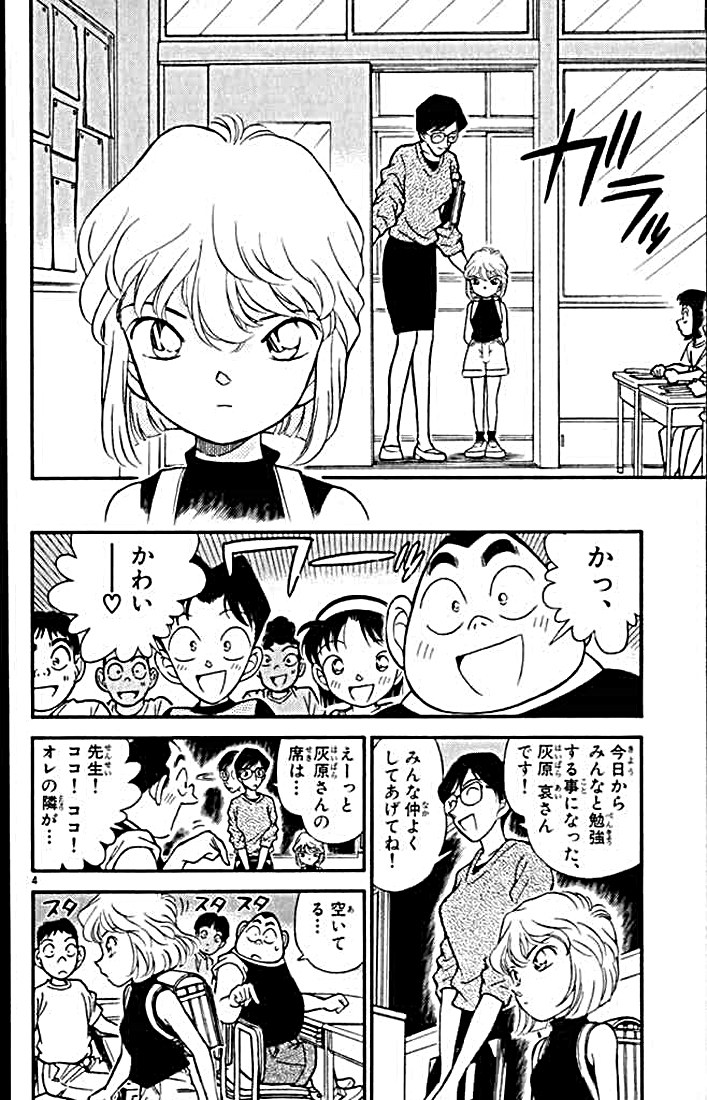
| Sound effect | Position | Chinese | English | Approach |
|---|---|---|---|---|
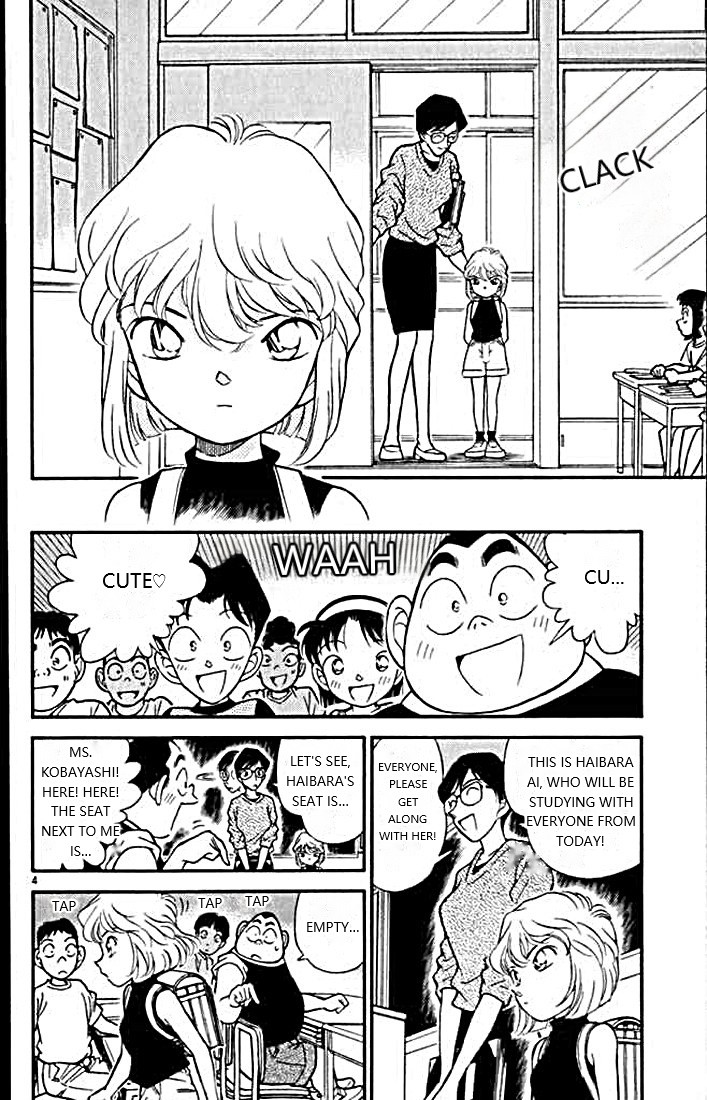
| ガラ | Top right | 哗啦 / 嘎啦 | Clack / Rattle | Onomatopoeic replacement |
| ワー | Middle panel | 哇——! | Waah! | Onomatopoeic replacement |
| スタ (×3) | Bottom left | 嗒、嗒、嗒 | Tap, tap, tap | Onomatopoeic replacement |
In practice you’ll find that these are not always familiar four-kana sound effects — the author builds them on common expressions. That is when you have to translate flexibly.
Typesetting the Result
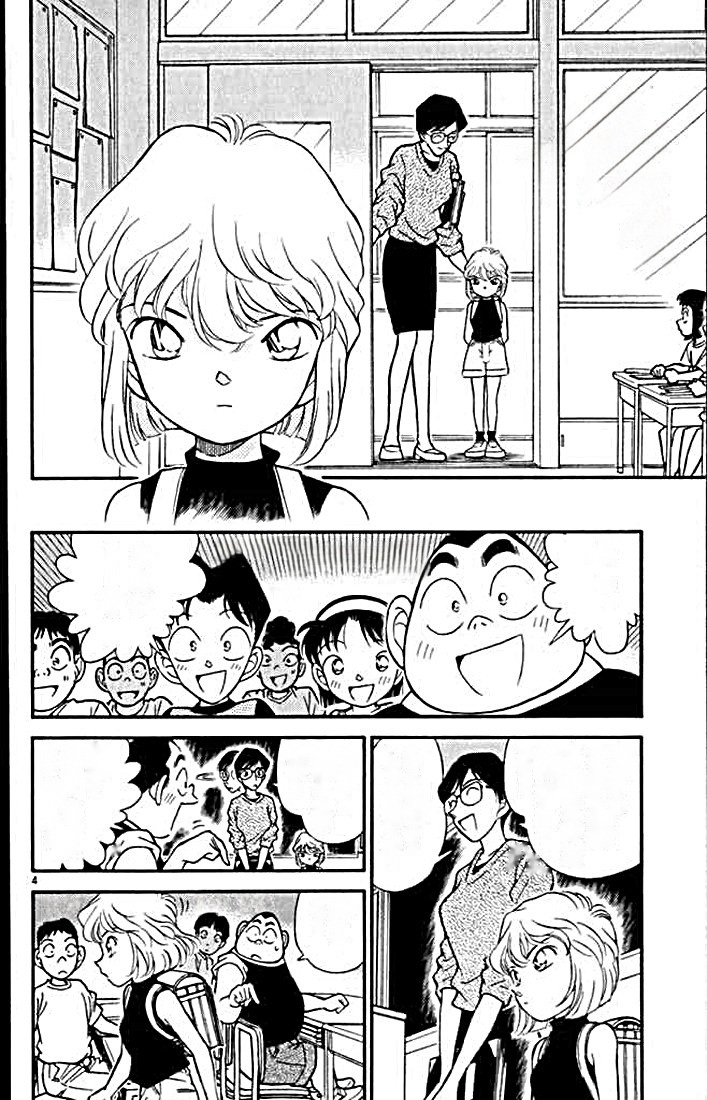
Below we use the computer-aided comic translation software ImageTrans to remove the text from the original image and put the translation back in.
The cleaned image with the text removed (using Lama Inpaint):
Our English version:
The official English translation:
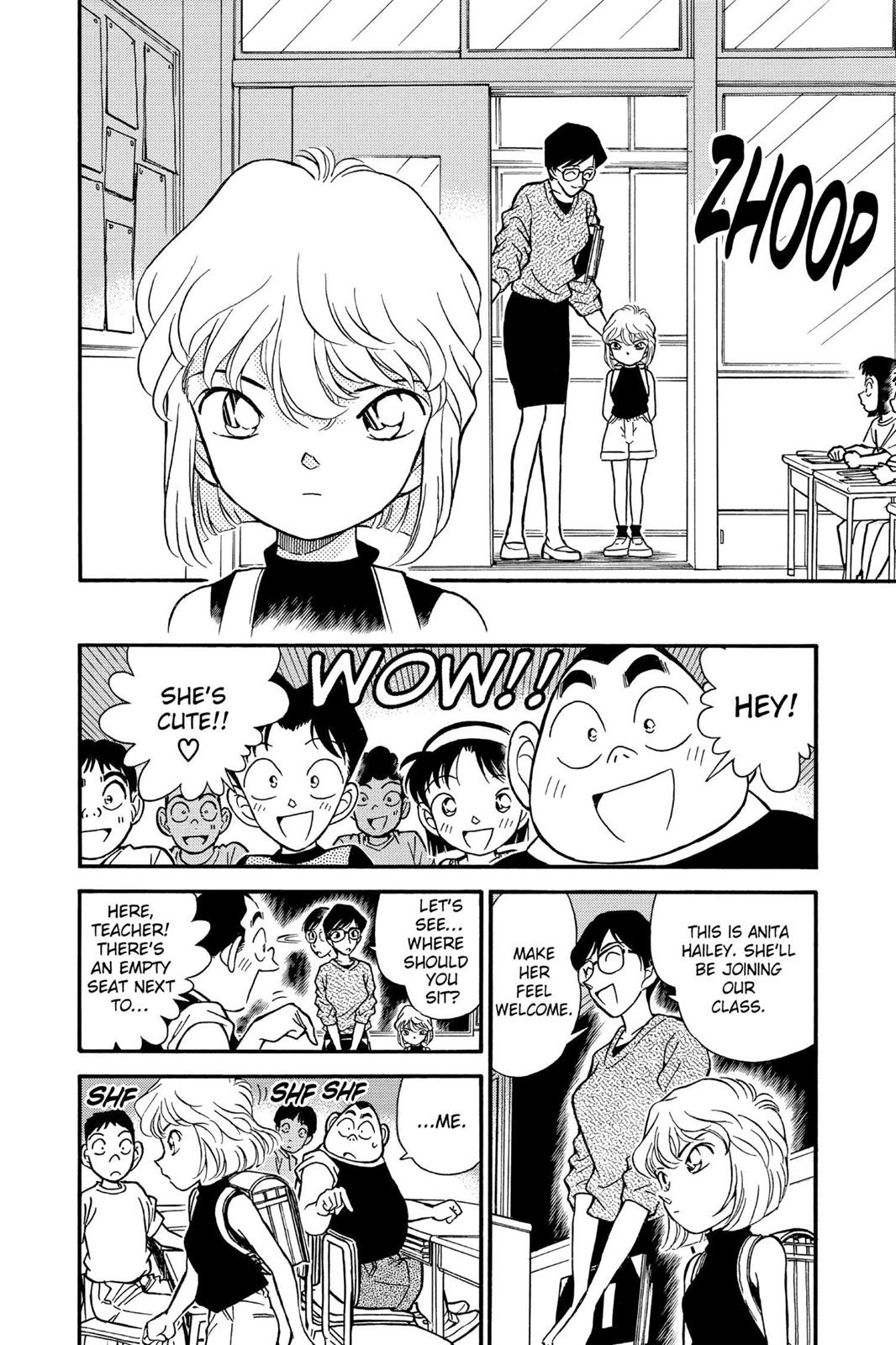
I’ve included the official translation here as well. As you can see, it translates the sound effects too, though the words it uses seem to be made up.
© 2026 BasicCAT ― Powered by Jekyll and Textlog theme